A CRM built around how the team already sells
An advertising-sales agency had tried CRMs before, and none stuck: too much data entry, too many features nobody used. We built one around how its team sells, kept current by talking to it, with commission reconciliation that now runs on its own.
- 1–4 hrs a week
- reconciling publisher statements by hand, before it ran on its own. And that’s one workflow.
The team’s estimate: one to four hours per statement, with about one statement a week.
Where it started
Bluegroup Media sells advertising to luxury brands across print and digital. Its people sell for a living rather than work with software, and the business ran on spreadsheets and email: prospecting information scattered across them, data entered by hand, and reports put together manually.
It had tried CRMs before, and they failed for two reasons. They were data-entry machines: every call and every deal meant another form to fill in, and the monotony was never worth what came out of it. And the big off-the-shelf systems are built to serve every kind of business at once, so most of what they offer goes unused and gets in the way. The team ended up working for the software instead of the other way round.
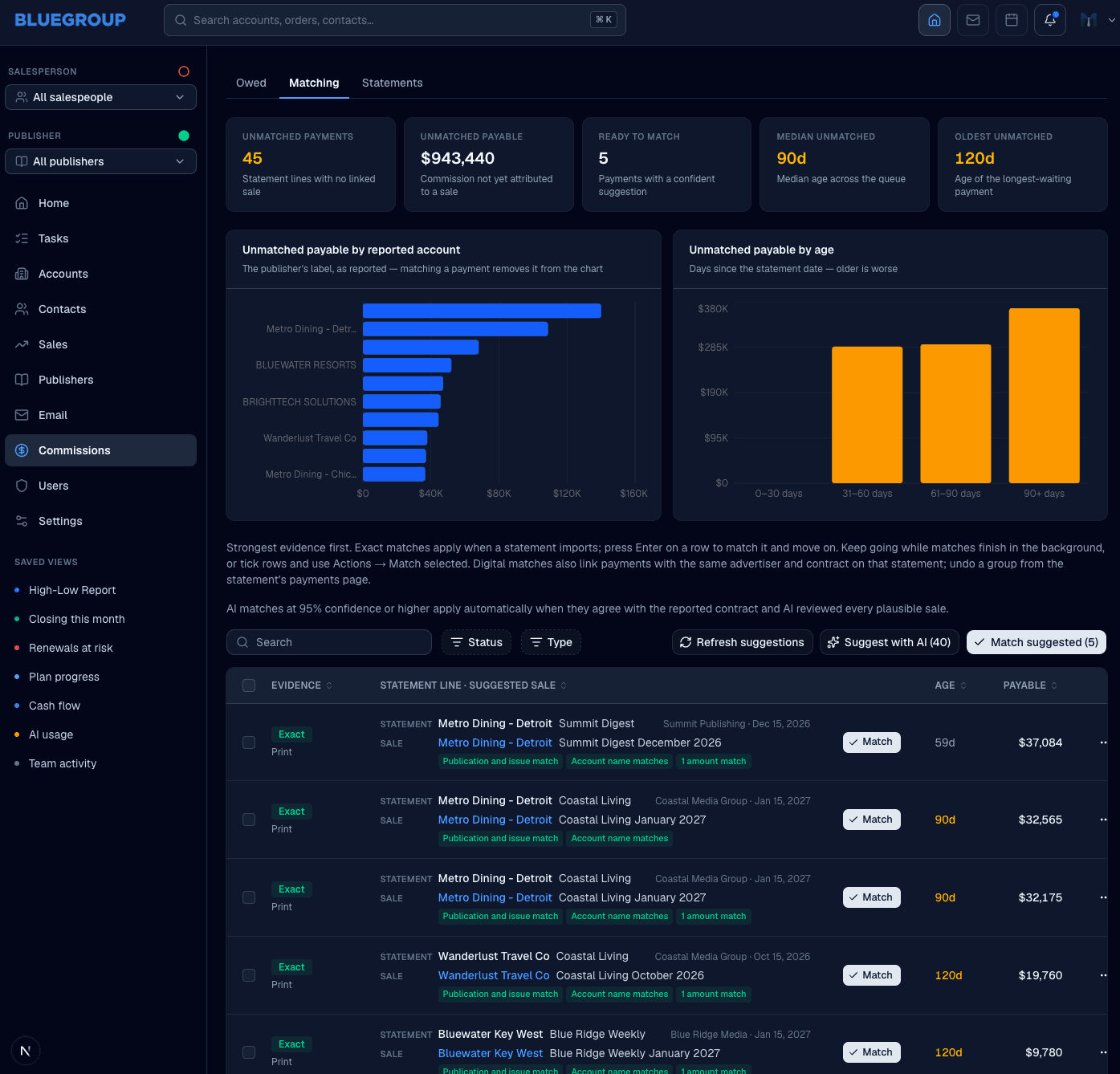
Commissions were the hardest part. Every time a publisher sent a statement, about once a week, someone spent one to four hours in custom spreadsheets matching each payment to its opportunity by hand, while checking that no opportunity had been overpaid or underpaid.
What we built
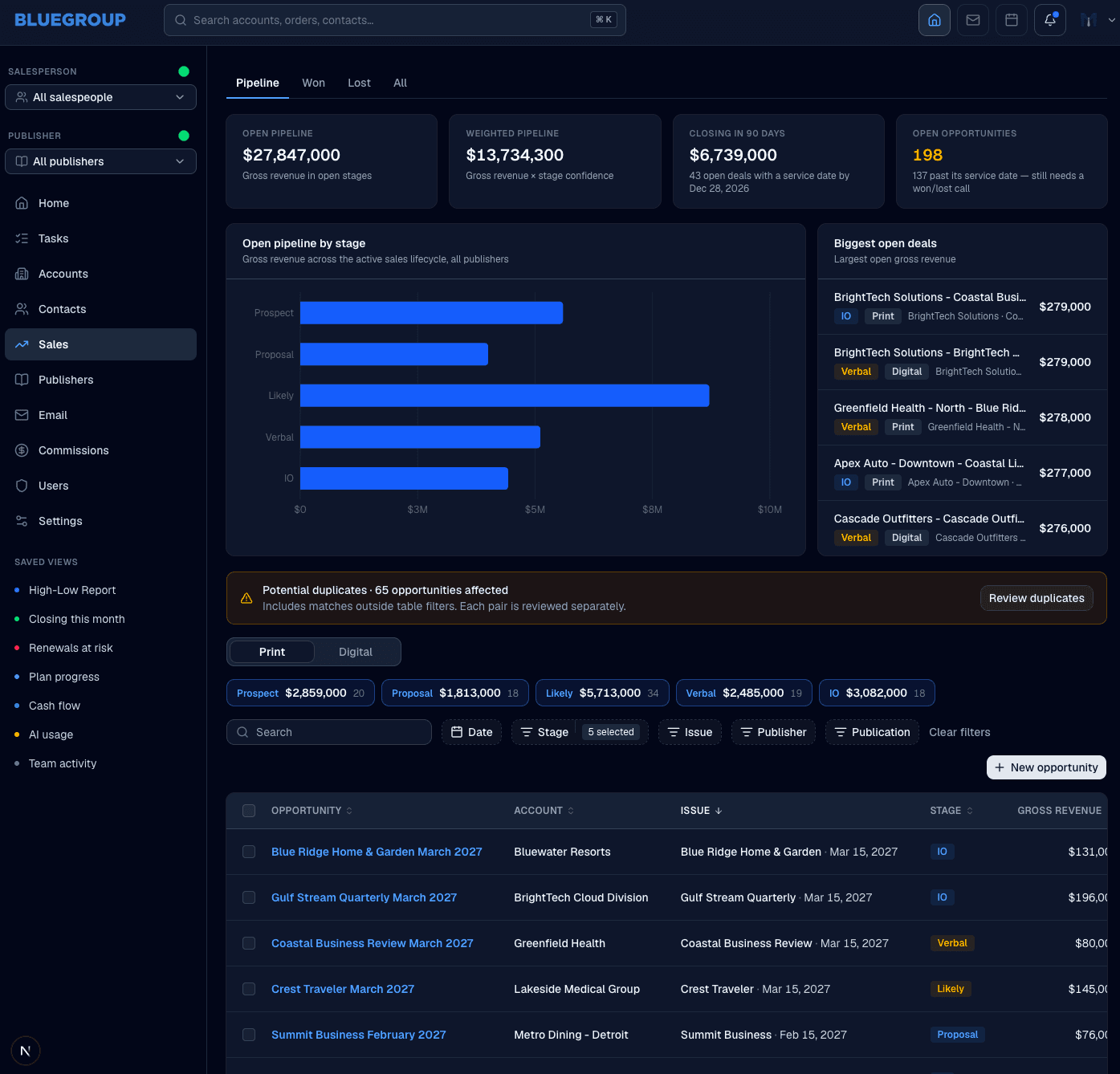
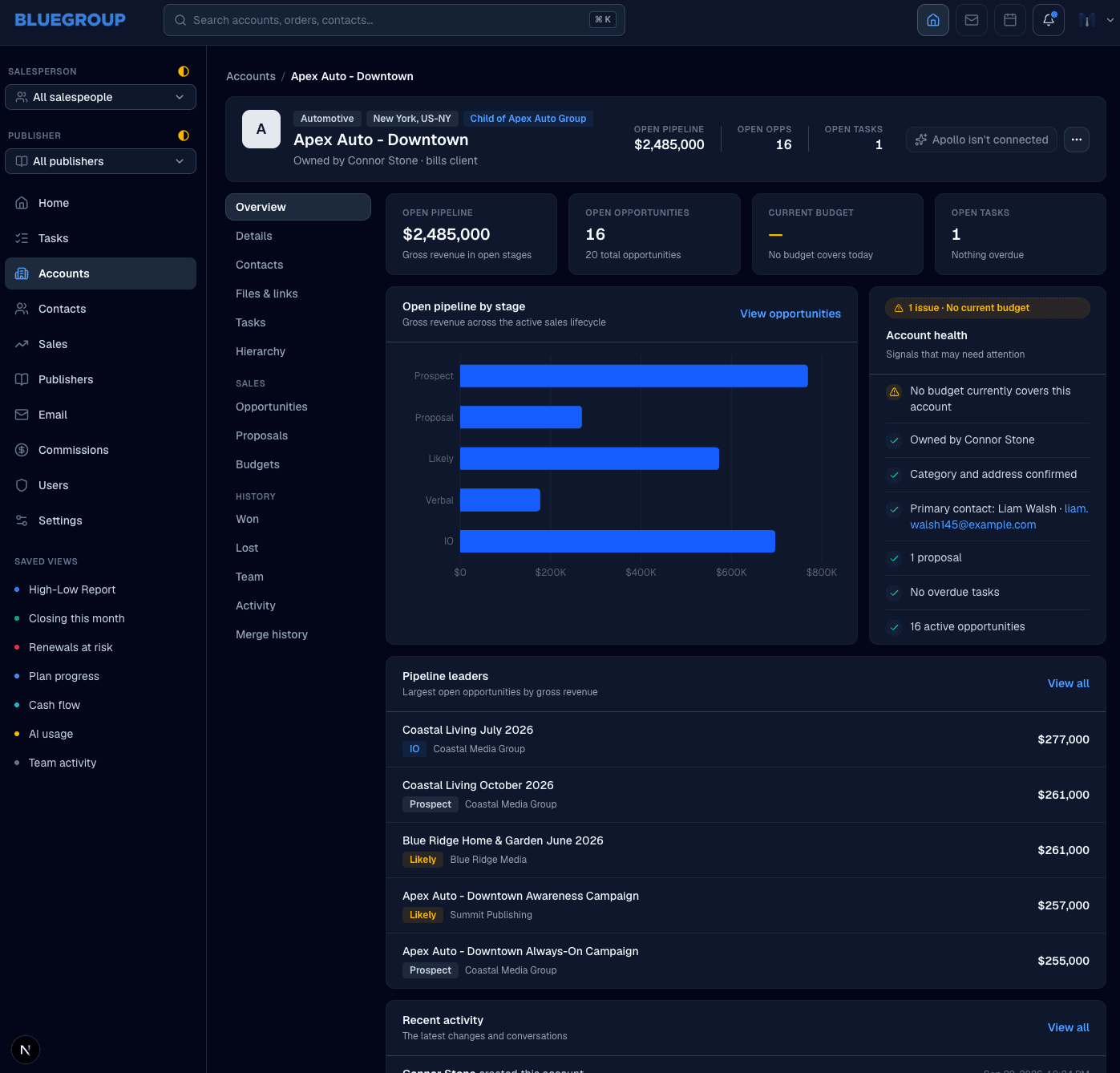
We built Bluegroup Media’s OS around the way the team already sells, starting with its CRM: accounts, opportunities and publications, with every deal followed from prospect to insertion order across print and digital. It has what this team works with and nothing it doesn’t, so there is nothing to wade through between a salesperson and the deal in front of them.
Then we took the data entry away. The CRM is connected to an AI assistant built around Bluegroup Media’s own accounts, publications and deals, so a salesperson updates it by describing what happened in plain language, even from their phone, and the update lands in the right record.
Commission reconciliation runs on its own. Exact matches apply as a publisher’s statement arrives, matching rules pair most of what remains, and AI suggests a sale for anything left over, while the system keeps track of what each opportunity has been paid in total.
What changed
The work that took one to four hours for every publisher statement now happens automatically. When we loaded years of commission history into the system, it reconciled all of it in a couple of hours: by our estimate, hundreds of hours of work the old way.
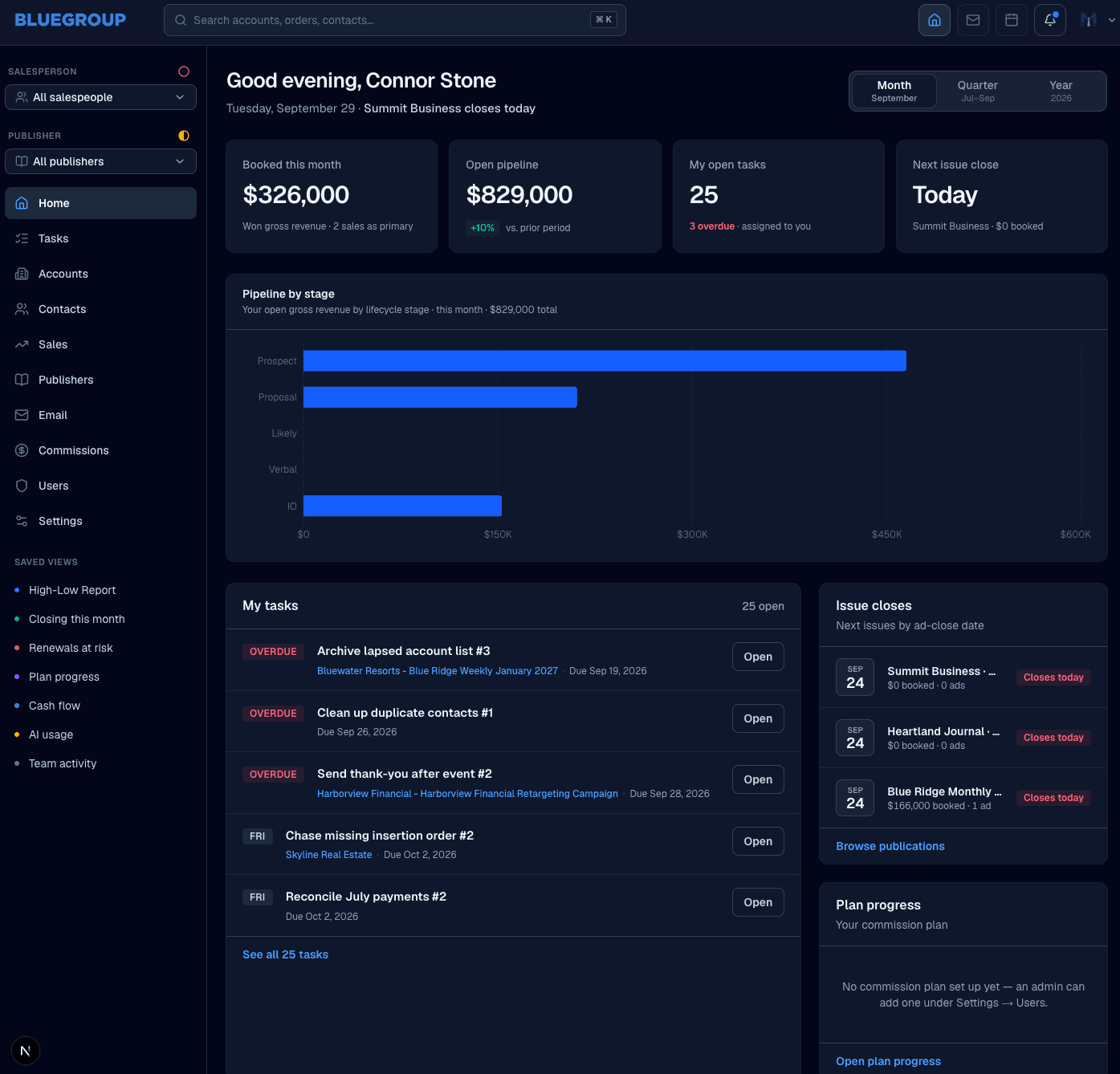
The CEO describes the bigger change as visibility. Leadership can now see what the team is doing every day and how each person is performing, without guessing or asking someone to put a report together.
Bluegroup Media went live in September 2026, so this is the start of the story rather than the end of it. As the team uses the system, we keep improving it.
“He learned our production workflow better than half our account managers. The system feels like it grew here instead of being bought.”
Built for problems like yours: Custom CRM development · Business process automation
The questions it answers.
Each screen is captioned with the question it answers. The screens inside the system are from a staging copy with sample data, not Bluegroup Media’s own records.
Your business has a pattern too.
Start with a free 30-minute call about how your business runs. No slide deck, no quote, and if you don’t need us, we’ll tell you.