

Custom software, finally in reach

Stop paying forspreadsheet sprawl

I build the CRM, ERP, or internal tool your company actually needs: one system shaped around the way you already work, in place of the six that almost fit. Then I keep building it as the business changes.

$0

to design and build it

6–12

weeks until it’s live

$1,780/mo

median savings, net of my fee

In production today

  • Magic City Remodeling logo
  • Blue Group logo
  • Med Sales Coach logo

Diagnostic

If two or more of these are true, custom software is the answer.

Six signs the workarounds now cost you more than the software would.

  • Double entry

    The same data gets typed into two systems every single day.

  • One spreadsheet deep

    One person, one file, and the whole operation depends on both.

  • Subscription creep

    Your subscription list has grown faster than your headcount.

  • Answers take days

    Margin and capacity questions take days and three people to answer.

  • Onboarding the workarounds

    New hires spend months learning the workarounds, not the work.

  • An edge nothing supports

    Your best process is an advantage no product on the market supports.

The math

Most clients spend less than they do today.

One system usually absorbs five or six subscriptions you’re already paying for. Here is a representative stack of what one system replaces, per month.

Before — 6 subscriptions

per month

  • CRM, 34 seats$2,210
  • Project & job scheduling$690
  • Estimating add-on$480
  • Reporting & BI dashboard$400
  • Forms & e-signature$260
  • Integration & automation glue$140
  • Total, before$4,180

Excludes the couple of hours a day someone spends moving data between them.

After — 1 system

per month

Your system, hosted and supported$2,400
Feature requests, unlimited usersincluded

Savings

$1,780

per month, while getting software that fits instead of six that don’t.

Your numbers will differ. I’ll build this exact table for your stack on the scoping call, before you commit to anything.

Selected work

Systems live in production

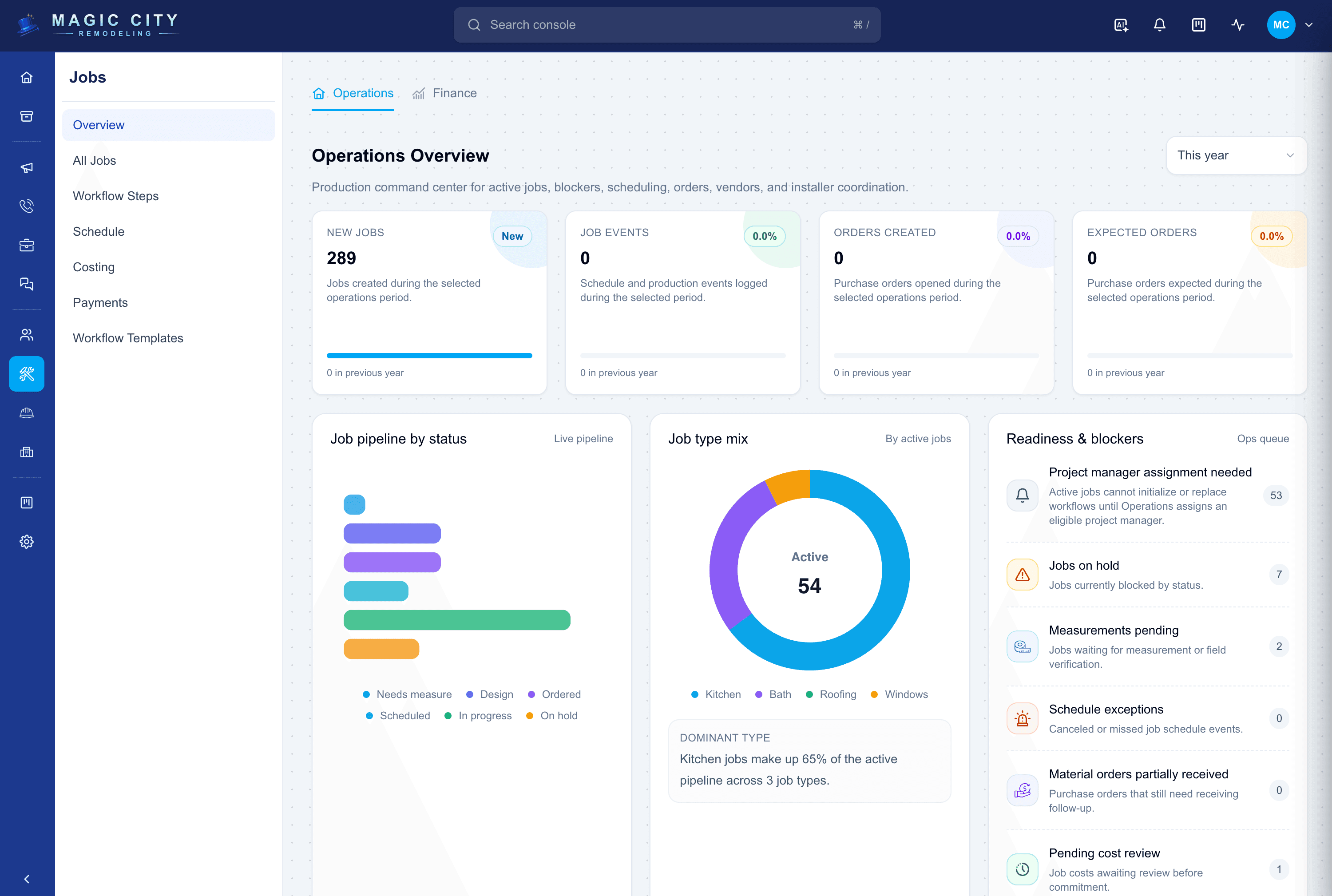
The contractor platform's operations overview: new job and purchase order counts, a job pipeline broken out by status from needs-measure through on-hold, a job type mix chart, and a queue of blockers awaiting action.

Construction & contracting

Bid-to-close job platform

Estimating, crew scheduling, change orders, and live job costing in one place. It replaced a shared drive of spreadsheets and a whiteboard nobody could see from the field.

22/wk
admin hours saved
+18%
change orders billed
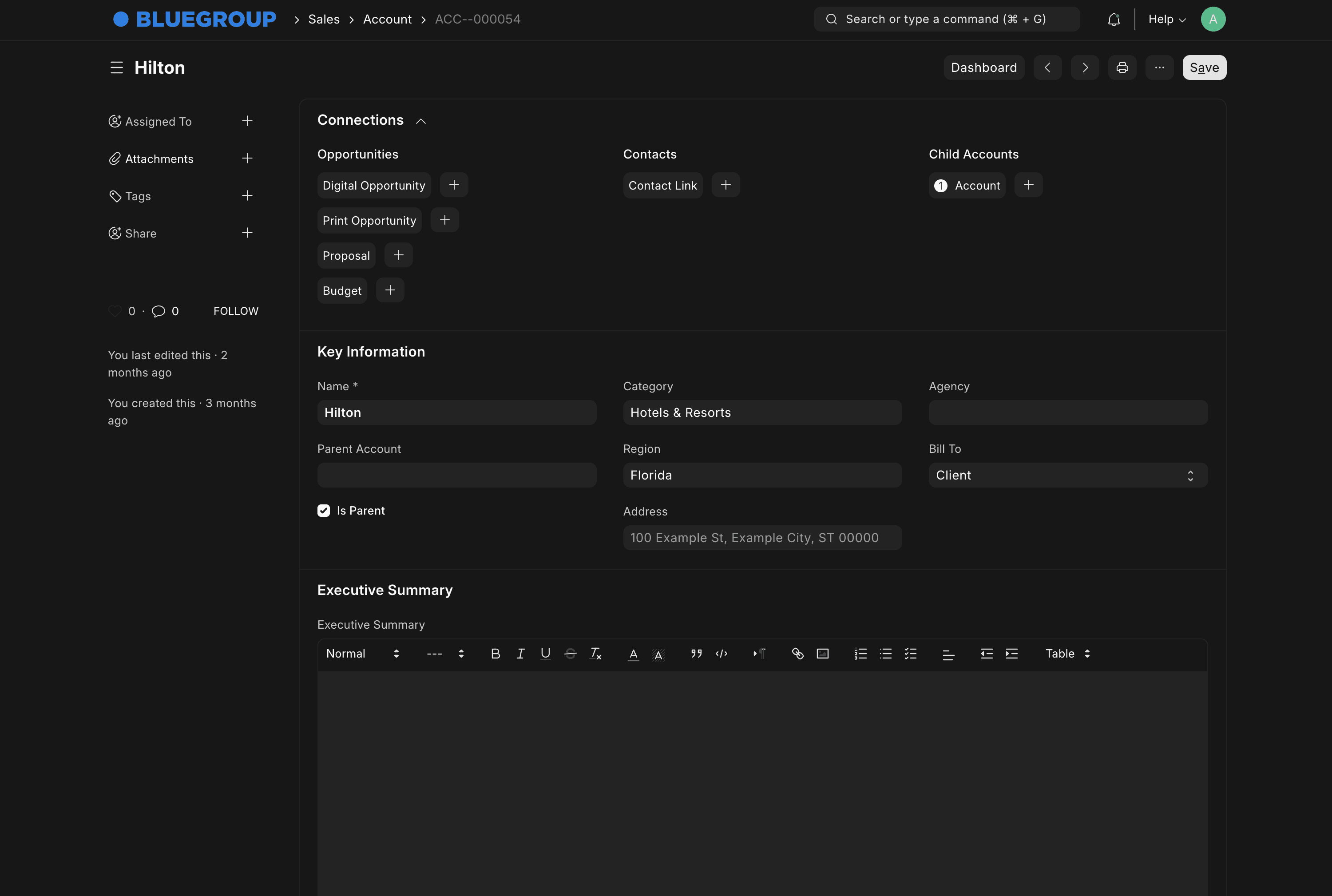
An account record in the agency CRM, linking the client to its digital and print opportunities, proposals, and budgets alongside key account fields and an executive summary.

Digital & print advertising

Campaign-native CRM

Pipeline, insertion orders, production schedules across print and digital, and billing, all against one client record. Account managers stopped rebuilding the same report every month.

6 days
faster monthly close
5
subscriptions retired
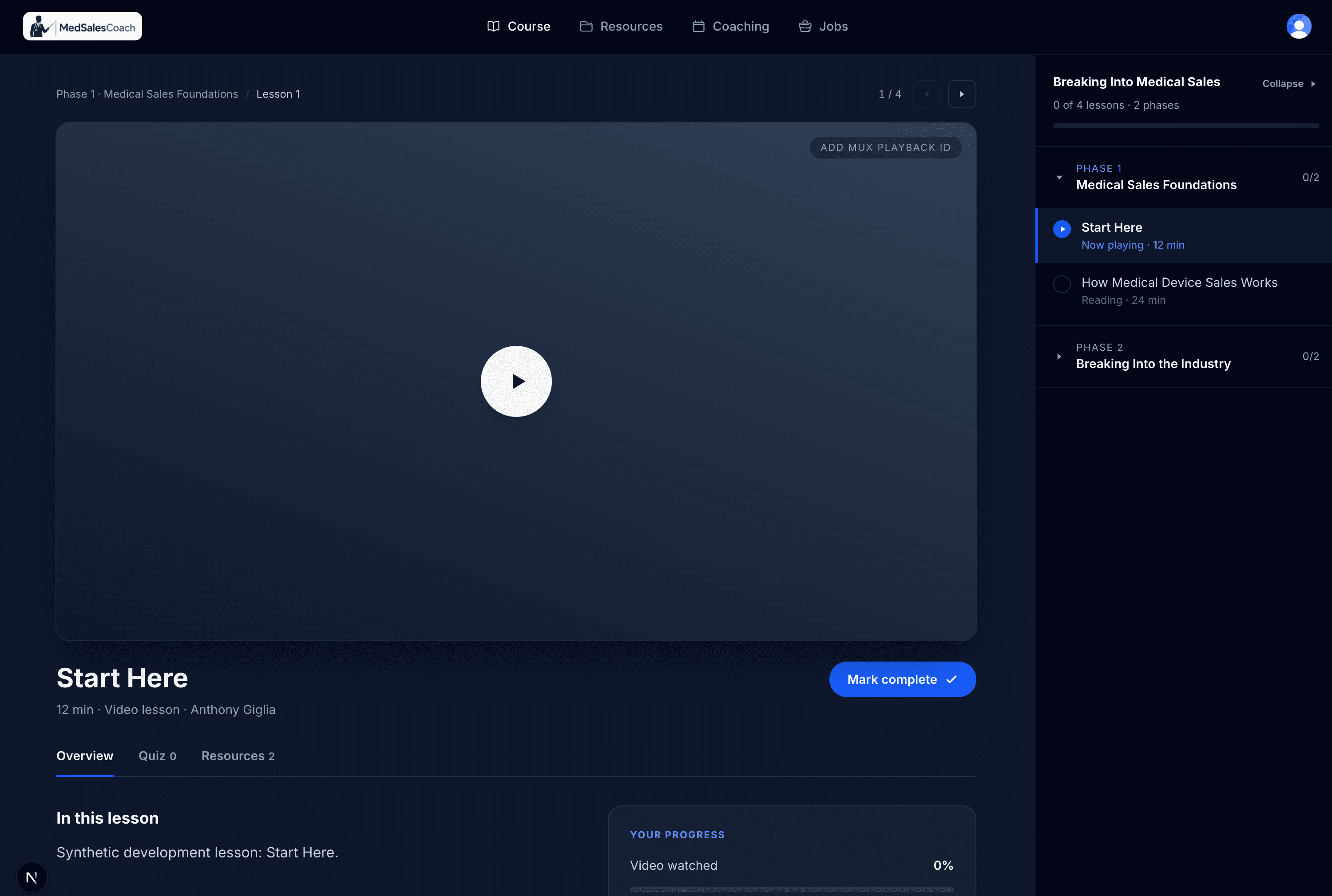
A lesson in the certification platform: video player, lesson overview with quiz and resources tabs, a per-rep progress panel, and a curriculum sidebar showing phases and completion.

Medical device sales training

Certification & coursework platform

Enrollment, curriculum delivery, proctored assessment, and automatic certificate issuance. Built around their compliance requirements rather than a generic LMS’s idea of a course.

1,400+
reps onboarded
0
hours of manual grading
“Two firms quoted us six figures and nine months. Connor had version one in front of our crews in five weeks, and he still answers the phone himself.”
Owner · Construction & contracting

Client names and references available on the scoping call.

Why me

Same first meeting.Different questions. Faster results.

I came to software from the business side of the desk: finance and deal work first, then the systems those deals ran on. Most shops arrive fluent in the engineering and learn your industry on your clock. The discovery phase you’d be paying for is a conversation I can already hold.

They ask: What’s a change order?
I ask: Do you bill change orders cost-plus or at a fixed markup, and who can approve one from the field?
They ask: Who are your users?
I ask: Who signs, who can override the signature, and what does that do to the invoice?
They ask: What reports do you need?
I ask: Which number do you actually manage the business on, and how often is it wrong today?
They ask: Can you integrate with our accounting system?
I ask: When does revenue get recognized, and does this system have to agree with the books or just feed them?
They ask: What’s your budget?
I ask: What is this costing you a month right now, in subscriptions and in hours nobody bills for?

None of that makes me a better engineer than the shop down the street. It means we start building in week one instead of week six.

Zero to build it. Flat monthly to run it and grow it.

Custom software usually dies at the quote, and honestly it should. Six figures up front is a bad bet on a system nobody has used yet.

$0

Build cost

No deposit, no milestone invoices, no discovery fee.

$0

Hosting

Infrastructure, backups, monitoring, and security patching are mine to worry about.

$0

Feature requests

New workflows, new reports, new modules as you grow. Included, within a fair-use scope we agree on in writing.

The rest of the terms

12 mo
Minimum term. Long enough for me to earn the build back, short enough that I have to keep earning it.
Flat
Monthly fee. Scoped to the system, not charged per seat. Add users without adding cost.
Yours
Your data, always. Full export any time, in a format you can actually use. Buyout available whenever you want it.

The monthly number depends on what’s underneath it. Systems I’ve built run from $500 to $10,000 a month. Yours is scoped to your system, and it’s in writing before you sign anything.

So I carry the build myself. I keep ownership of the source code and license it to you for as long as we work together; that trade is what makes zero up front possible. The code sits in escrow, and it releases to you outright if I ever can’t continue.

Year one, one client

Launch day is week seven of a much longer build.

Feature requests aren’t change orders here. They’re the reason the monthly fee exists. Below: one client’s first year, release by release. Everything after week 7 came from them asking.

31
releases in 12 months
$0
billed beyond the monthly fee
  1. Week 7 · launch

    Bids, jobs, crews, and change orders live for the whole company. Two legacy tools cancelled the same week.

  2. Month 2 · requested

    Field photo uploads from phones, attached to the job and visible in the office within seconds.

  3. Month 4 · requested

    Per-crew margin reporting after a foreman asked which jobs were actually making money.

  4. Month 6 · requested

    Two-way accounting sync, retiring a $140/mo integration service and a weekly export ritual.

  5. Month 9 · requested

    A client-facing portal for approvals, after they won a contract that required one.

  6. Month 12 · requested

    A second division onboarded onto the same system. No new license, no new build cost.

How it goes

Four steps. Billing starts at the fourth.

The first three cost you time and nothing else. The invoice arrives once the system is live and your team is using it.

  1. 30 minutes

    Scoping call

    How the work really flows today, workarounds included. We total up what your current stack costs, together.

    Cost at this step: Free

  2. About a week

    Written plan

    What I’d build first, what I’d deliberately leave out, the timeline, your monthly number, and the list of what it replaces.

    Cost at this step: Free

  3. 6–12 weeks

    Build in the open

    Working software every week or two, not a status deck. Your team uses it early and changes it while changing is still cheap.

    Cost at this step: Nothing yet

  4. Ongoing

    Live, and still moving

    Hosting, support, and a steady stream of requested features. The system keeps changing shape as the business does.

    Cost at this step: Flat monthly

Connor Stone, photographed in a dark navy suit and open-collar white shirt.

Who you’re hiring

Connor Stone

Gemstone Consulting Services is one person. Me on the scoping call, me writing the plan, me building it, and me answering the phone in year three. Nobody gets handed off to an account manager they’ve never met.

That is also why I work with a small number of clients at a time. The model only pays off if I’m still around to keep building years from now, so I take on work at a rate I can actually sustain.

“He learned our production workflow better than half our account managers. The system feels like it grew here instead of being bought.”
Partner · Digital & print advertising

The hard part of every first call

Five things that come up every time, and more to the point, who ends up holding each one once the contract is signed.

They say: Why not just buy Salesforce or NetSuite?

Sometimes you should, and I’ll tell you when.

They’re excellent at problems thousands of companies share. They get expensive when your advantage is a process nobody else runs.

Carried by: Yours to call
They say: What counts as a feature request?

Anything that extends the system we already built.

A fair-use scope, in writing. If something is genuinely a new system, I’ll say so and we’ll price it separately. That conversation has been rare.

Carried by: Mine
They say: What if something happens to you?

The system keeps running, your data is yours, and the code releases to you.

Source-code escrow releases it outright if I can’t continue. Deliberately boring technology from there, so any competent developer can pick it up.

Carried by: Mine
They say: How much will it cost, and how long will it take?

Nothing to build, flat monthly to run, six to twelve weeks to live.

Both numbers are in writing before you sign anything, alongside the list of what you’ll be able to cancel.

Carried by: Mine
They say: We tried a dev shop before and it failed.

They sold you a spec, built the spec, and left.

I don’t earn anything until it’s live, and I only keep earning while it stays useful. That’s why I’m still here in year three.

Carried by: Mine

That last column is the whole pitch. The risks a shop normally hands you at signing, I kept. That is why I can charge nothing up front.

Next step

Show me how your business runs. I’ll tell you what I’d build, what you could cancel, and whether you need me at all.

30 minutes, free, no slide deck. Worst case, you leave with a clearer map of your own operation and a total of what it’s costing you.

I build for a handful of companies at a time, so I can only say yes to a few of these a quarter.